-
E-mail
727387715@qq.com
-
Phone
13686843730
-
Address
No. 8 Yangxia Avenue, Xinqiao Third Industrial Zone, Bao'an District, Shenzhen
Product Categories
Shenzhen Juyibo Intelligent Technology Co., Ltd


Supply meteorological and environmental monitoring system company
NegotiableUpdate on 01/17
- Model
- Nature of the Manufacturer
- Producers
- Product Category
- Place of Origin
Overview
The online monitoring system for meteorological environment in scenic spots and parks is a comprehensive environmental management solution that integrates multi-dimensional data collection, real-time transmission, intelligent analysis, and early warning release. Through the collaboration of distributed monitoring networks and digital platforms, it achieves 24-hour uninterrupted monitoring of environmental factors such as atmospheric environment, water quality, soil, noise, etc., providing accurate and efficient technical support for environmental supervision, pollution control, and ecological protection.
Product Details
Introduction:
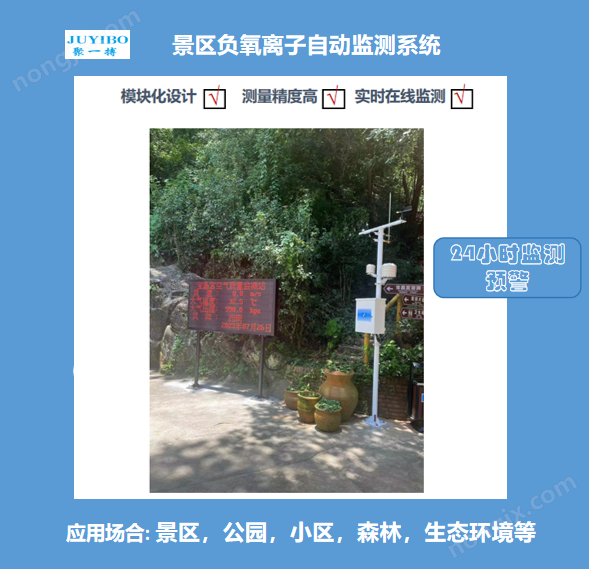
Online Monitoring System for Meteorological Environment in Scenic Area ParksIt has been successfully applied in ecological parks, wetland parks, waterfall parks, forest parks, nature reserves, and tourist attractions across the country. This system can simultaneously monitor multiple environmental factors and can be expanded or reduced according to user needs. It can monitor negative oxygen ions, temperature, and humidity in the air 24 hours a day, PM2.5, Monitor and transmit noise concentration data. Modular combination structure design, all monitoring sensors can be replaced, equipped with professional installation brackets and poles, with two installation methods: column installation and wall mounted installation. On site visual data monitoring, remote cloud platform monitoring, mobile APP query, and later operation and maintenance are relatively convenient.
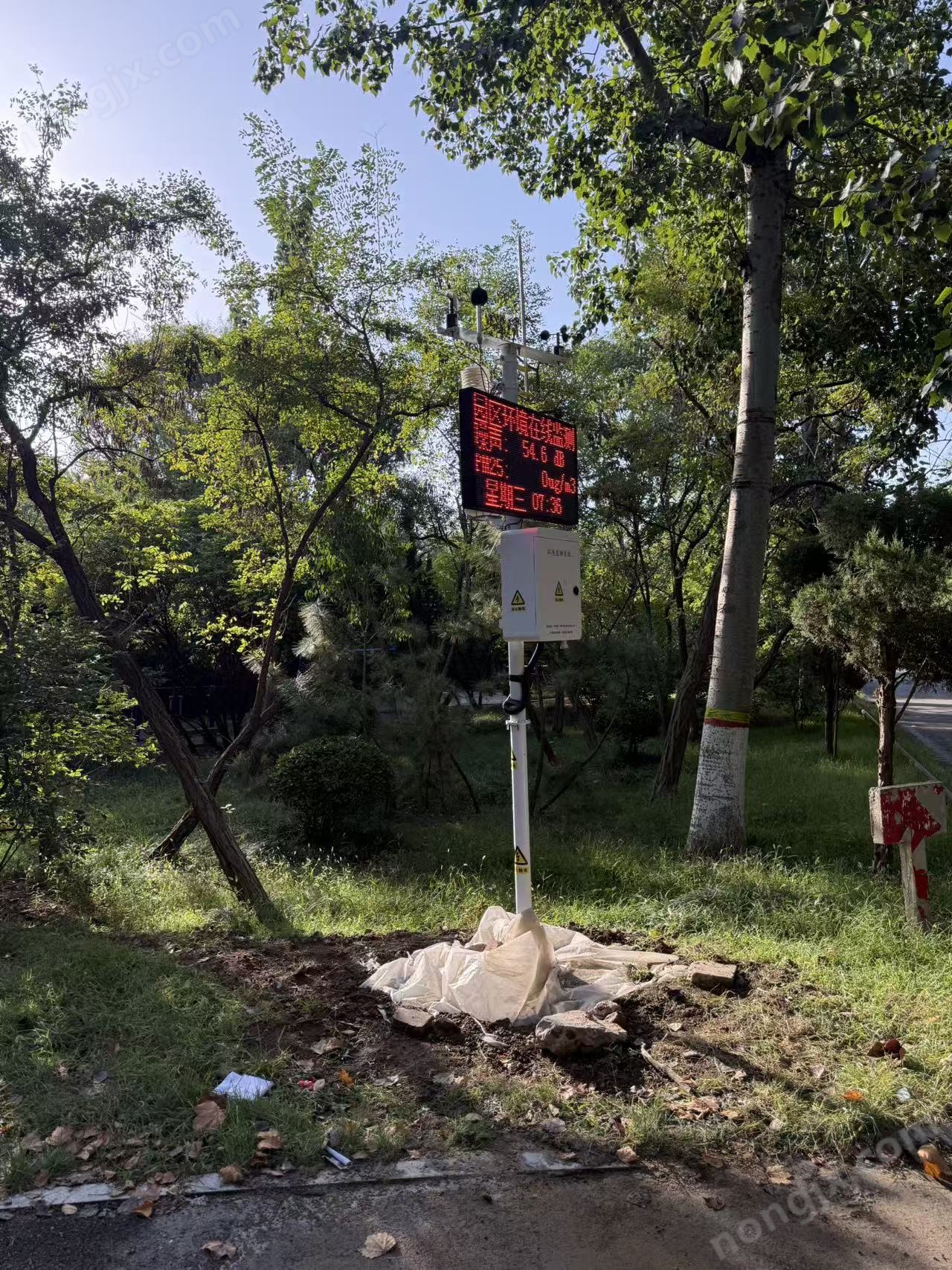

Online Monitoring System for Meteorological Environment in Scenic Area ParksCore Composition and Architecture
The environmental online monitoring system adopts a distributed layered architecture, forming a complete chain from front-end perception to back-end application, mainly including four core modules:
1. Data collection layer (front-end perception network)
As the data source of the system, responsible for real-time collection of environmental elements, the core equipment includes:
Monitoring terminals: According to the monitoring objects, they are divided into atmospheric monitoring stations (including micro air stations), water quality automatic monitoring devices, soil sensors, noise monitoring terminals, etc., which can accurately collect data PM2.5、PM10, Temperature and humidity, air pressure, negative oxygen ions, illumination, rainfall, noise decibels and other indicators, some equipment supports synchronous monitoring of more than 15 parameters;
Sensor unit: using technologies such as laser scattering, electrochemistry, and spectral analysis, among which the detection limit of biosensors in the field of water quality monitoring has reached one trillionth, which is two orders of magnitude more accurate than traditional methods;
Data collector: preliminary filtering and calibration of raw data to ensure data integrity and support stable operation in harsh environments (such as chemical park equipment that can withstand) PH 2-12 conditions).
2. Data transmission layer (communication network)
Responsible for securely and real-time transmitting the collected data to the data center, using Wired+wireless "integrated transmission mode:
Wired transmission: Suitable for fixed monitoring stations (such as urban air automatic monitoring stations) through fiber optic dedicated lines, Ethernet, etc., to ensure the stability and large capacity of data transmission;
Wireless transmission: relying on 5G, NB IoT, GPRS and other technologies are suitable for remote areas, mobile monitoring points or temporary control scenarios, supporting millisecond level data push. Abnormal data in a certain water quality monitoring project can trigger an alert within 10 seconds;
Transmission standard: Strictly follow the "Data Transmission Standard for Pollution Source Online Automatic Monitoring (Monitoring) System" to ensure uniform data format and traceability.


Similar Product Recommend


