-
E-mail
444861877@qq.com
-
Phone
13641972652
-
Address
No. 253 Yulu, Jiading District
Product Categories
- Electrical fire protection current limiting protector
- ALP intelligent protection device
- DDS/DTS/DTZ series measuring instruments
- Energy storage cabinet EMS
- Safe Electricity Use
- AM series comprehensive protection and measurement device
- Residual current sensor
- Industrial insulation tester
- EMS
- IoT Meter Solution
Ankerui Electric Co., Ltd


Electrical insulation monitoring equipment
NegotiableUpdate on 01/17
- Model
- Nature of the Manufacturer
- Producers
- Product Category
- Place of Origin
Overview
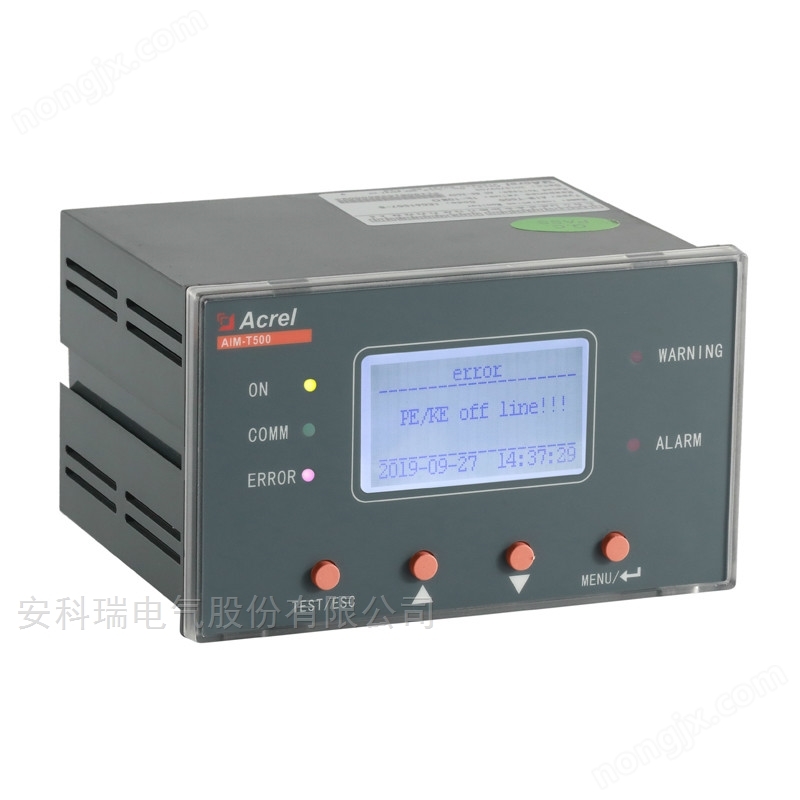
Electrical insulation monitoring equipment is applied in IT distribution systems in industrial sites, mainly including AIM-T300, AIM-T500, and AIMT500L products, all of which are suitable for pure AC, pure DC, and AC/DC hybrid systems. IT insulation monitoring instrument
Product Details
Electrical insulation monitoring equipmentfunction
1. Real time monitoring of the insulation resistance of the IT system to ground, and triggering fault warning or alarm functions when the resistance increases;
2. Multiple fault indication methods such as relay alarm output and LED light alarm output;
3. Event recording function, convenient for operators to view and analyze fault types and occurrence times, and timely identify system operation status;
4. Self check function, which can achieve one click fault self check of instrument hardware circuit;
5. Wire breakage monitoring, real-time monitoring of PE/KE function grounding wire connection status;
6. One RS485 interface, standard MODBUS-RTU protocol;
7. Supports manual/automatic reset modes;
8. Wide application range, suitable for AC, DC, and AC/DC hybrid IT systems.
Maintenance and upkeep of electrical insulation monitoring equipment:
Power off operation: Before maintenance, the tester should be powered off to ensure personnel safety.
Tool usage: Use the correct tools for maintenance and upkeep to avoid equipment damage caused by improper tool usage.
Anti static measures: During maintenance, anti-static measures should be taken to avoid the impact of static electricity on the equipment.
Avoid contact with liquids: During maintenance, avoid allowing liquids to come into contact with the interior or surface of the tester to prevent equipment corrosion or short circuits.
Record maintenance information: After each maintenance, relevant maintenance information such as time, personnel, faults, and handling should be recorded for easy tracking and management.
Operate according to regulations: During maintenance and upkeep, relevant regulations and operation manuals should be followed to avoid equipment damage or personnel safety issues caused by misoperation.
Regular training: Provide regular training to personnel responsible for maintenance and upkeep to improve their skills and knowledge, ensuring that they can complete maintenance and upkeep work correctly.
Regular inspection and update: Based on the actual situation of the equipment, conduct comprehensive inspections regularly to promptly detect and solve potential faults and problems. Replace or update components that have reached their service life or are damaged.
function
Real time insulation monitoring
Continuously monitor the insulation resistance value of the power system to the ground, and trigger an alarm when the resistance value is below the preset threshold to prevent electrical faults caused by insulation degradation.
For example, the Ankerui AIMT500L insulation monitor can monitor the insulation resistance of the system to ground in real time, output an alarm in case of a fault, and upload it to the background.
Fault location and warning
By working together with the signal generator and locator, the faulty branch can be quickly locked and troubleshooting time can be reduced.
For example, the Ankerui AIL200 series insulation fault locator can identify fault branches based on signal response, improving fault handling efficiency.
Data recording and analysis
Store historical data (such as insulation resistance values, alarm records, etc.), support curved display, and facilitate operation and maintenance personnel to analyze the trend of insulation performance changes.
For example, some devices can store 1000 event records, including complete parameters such as timestamps, impedance values, and voltage waveforms.
Environmental adaptability monitoring
Monitor environmental parameters such as temperature and humidity, evaluate their impact on insulation performance, and enhance monitoring comprehensiveness.
Similar Product Recommend