-
E-mail
3440125819@qq.com
-
Phone
18911397564
-
Address
No.1 Shangdi 10th Street, Shangdi Science and Technology Park, Haidian District, Beijing
Product Categories
Beijing Beiguang Jingyi Instrument Equipment Co., Ltd

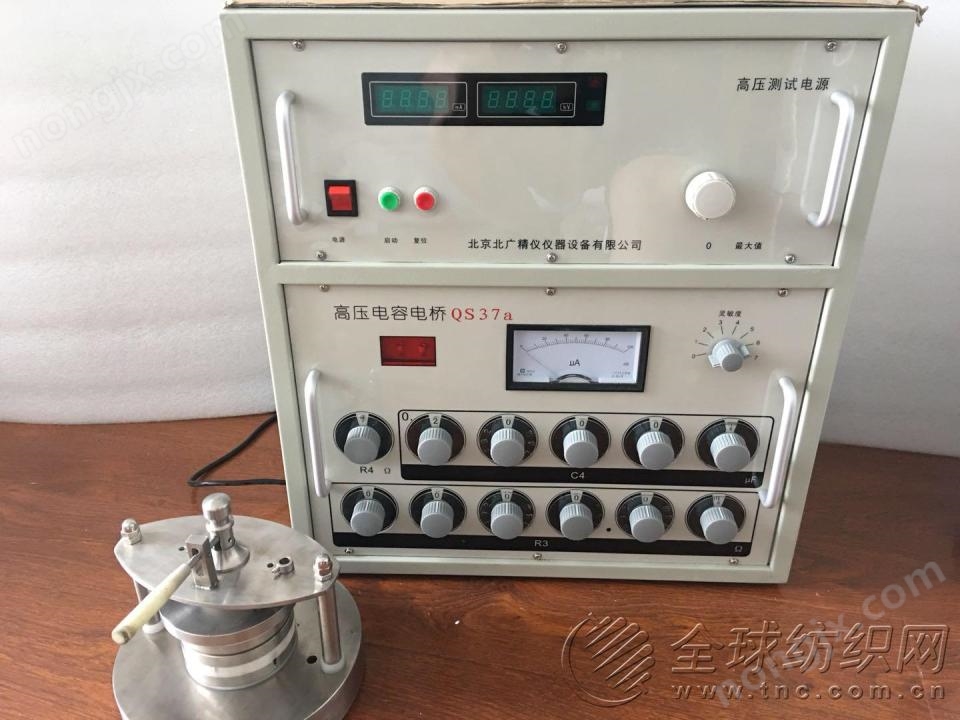


Supplier of dielectric constant dielectric loss tester
NegotiableUpdate on 01/18
- Model
- Nature of the Manufacturer
- Producers
- Product Category
- Place of Origin
Overview
The fully automatic high-voltage digital bridge dielectric constant tester is an important physical property for various ceramics such as electrical ceramics, device ceramics, capacitors, and composite materials. By measuring the dielectric loss tangent tan δ and dielectric constant (ε), various factors affecting dielectric loss and dielectric constant can be further understood, providing a basis for improving material performance; The basic principle of the instrument is to use high-frequency resonance method and provide universal, multi-purpose, and multi range impedance testing. It uses a single-chip computer as the control of the instrument, and the measurement core adopts frequency digital locking. The standard frequency test points are automatically set
Product Details
Beijing Beiguang Jingyi Instrument Equipment Co., Ltd. solemnly declares that if needed, please search for (Beijing Beiguang Jingyi Instrument Equipment Co., Ltd.)
Fully automatic high-voltage digital bridge dielectric constant tester
technical indicators
1. Q-value measurement
a. Q-value measurement range: 5-999.
b. Q-value range: 30, 100, 300, 999, automatic shifting.
c. Nominal error
Frequency range: 25kHz to 10MHz;
Inherent error: ≤ 5% ± 2% of the full-scale value; Work error: ≤ 7% ± 2% of the full-scale value;
Frequency range: 10MHz to 50MHz;
Inherent error: ≤ 7% ± 2% of the full-scale value; Work error: ≤ 10% ± 2% of the full-scale value.
2. Inductance measurement
a. Measurement range: 0.1 μ H-1H.
b. Classification: Divided into seven ranges.
0.1~1μH, 1~10μH, 10~100μH,
0.1~lmH, 1~10mH, 10~100mH, 100 mH~1H。
3. Capacitance measurement
a. Measurement range: 1-460pF (see usage rules for capacitance measurements above 460pF);
b. Capacity adjustment range
Main capacitor: 40-500pF;
Accuracy: ± 1.5pF below 150pF; ± 1% above 150pF;
Fine tuning capacitance: -3pF~0~+3pF;
Accuracy: ± 0.2pF.
4. Oscillation frequency
a. Oscillation frequency range: 25kHz to 50MHz;
b. Frequency classification:25~74kHz, 74~213kHz, 213-700kHz, 700kHz~1.95MHz,
1.95MHz~5.2MHz, 5.2MHz~17MHz, 17~50MHz。
c. Frequency error: 2 × 10⁻⁴ ± 1 word.
5. Q qualified indication preset function, preset range: 5-999.
6. Normal working conditions of the instrument
a. Environmental temperature: 0 ℃ to+40 ℃;
b. Relative humidity:<80%; <>
c. Power supply: 220V ± 22V, 50Hz ± 2.5Hz
7. Sample size
Circular shape: thickness 2+0.5mm, diameter of Φ 30~40mm (when ε<12), Φ 25~35mm (when ε=12~30), Φ 15~20mm (when ε>30)
8. Other
a. Power consumption: approximately 25W;
b. Net weight: approximately 7kg;
c. Dimensions: (l × b × h) mm: 380 × 132 × 280.
Q Qualified indication preset function
Preset range: 5-1000.
6. Normal working conditions of Q table
a. Environmental temperature: 0 ℃ to+40 ℃;
b. Relative humidity:<80%; >
c. Power supply: 220V ± 22V, 50Hz ± 2.5Hz.
7. Other
a. Power consumption: approximately 25W;
b. Net weight: approximately 7kg;
c. Dimensions: (l × b × h) mm: 380 × 132 × 280.
Fully automatic high-voltage digital bridge dielectric constant testerInductor:
According to the testing frequency requirements, different quantities of inductors need to be configured.
For example, when testing at a frequency of 1MHz, a 250 μ H inductor is required, and when testing at a frequency of 50MHz, a 0.1 μ H inductor is required.
High frequency dielectric sample (optional):
In the current high-frequency dielectric material verification system, the measurement standard provided by the verification department for the high-frequency dielectric loss measuring instrument is the high-frequency standard dielectric sample.
This sample is made of artificial sapphire, quartz glass, alumina ceramic, polytetrafluoroethylene, epoxy board and other materials with a diameter of 50mm and a thickness of 1-2mm for testing. Users can order as needed to ensure the repeatability and accuracy of the testing device.
Dielectric constant dielectric loss testerFeatures:
Our company's innovative automatic Q-value retention technology enables Q measurement resolution to 0.1Q and tan δ resolution to 0.00005.
Capable of testing the changes in dielectric loss angle (tan δ) and dielectric constant (ε) of solid insulation materials between 10kHz and 120MHz.
The residual inductance value of the tuning circuit is as low as 8nH, ensuring small errors in (tan δ) and (ε) at 100MHz.
Specially designed LCD screen with menu style display of multiple parameters: Q value, test frequency, tuning status, etc.
◎ Q-value range automatic/manual range control.
DPLL synthesis generates test signals ranging from 1kHz to 60MHz and 50kHz to 160MHz. Independent signal source output port, so this machine is also a synthetic signal source.
The testing device complies with the requirements of the national standard GB/T 1409-2006, American standard ASTM D150, and IEC60250 specifications.
Dielectric constant and dielectric loss testerThe working frequency range is 10kHz to 120MHz, and it can complete the testing of the high-frequency dielectric loss angle (tan δ) and dielectric constant (ε) changes of materials within the working frequency.
Characteristics and significance of dielectric constant dielectric loss tester
1、 Core Features
Precision measurement system
·By using high-frequency resonance method and bridge method phase difference detection technology, the complex dielectric constant (ε 'and ε' ') and dielectric loss tangent (tan δ=ε' '/ε') are calculated by comparing the current phase difference between the standard capacitor and the test sample. The measurement accuracy can reach microvolt level signal resolution.
·Equipped with a three electrode structure (protective electrode, measuring electrode, high-voltage electrode) to eliminate edge effect errors and ensure that the electric field strength is close to the actual working conditions (such as the IEC 60250 standard requirement of 1kV/mm).
Broadband and multi parameter coverage
·Supports frequency range from low frequency (20Hz) to high frequency (1MHz), and some models can be extended to radio frequency range to meet the electrical characteristic analysis needs of different materials.
·Simultaneously measuring parameters such as capacitance, inductance, and resistance, with capacitance coverage ranging from 3pF to 30 μ F, suitable for performance evaluation of capacitors, insulation materials, and composite materials.
Intelligent control and extended functions
·Integrated automated testing process, temperature control (-40 ℃ to 200 ℃) is achieved through PID algorithm, and some models support liquid nitrogen low-temperature expansion to adapt to environmental testing.
·Equipped with large capacity storage and data analysis software, supporting data export, remote monitoring, and report generation to improve testing efficiency.
2、 Application significance
Material research and optimization
·By accurately measuring the dielectric constant (ε) and dielectric loss (tan δ), the polarization ability, energy loss characteristics, and microstructure of materials are revealed, guiding the development and modification of new materials (such as surface treatment optimization of nanocomposites).
Industrial Quality Control
·In the power system, detecting the dielectric loss of insulation materials (such as high-voltage cables) can prevent insulation layer aging or breakdown accidents caused by temperature rise, and ensure the safe operation of equipment.
·Optimize the selection of dielectric materials for electronic components such as capacitors and inductors, and improve the Q value and component lifespan under high-frequency working conditions.
Research and standard verification
·Study the phenomenon of dielectric relaxation and the aging mechanism of materials, analyze the dielectric properties at different frequencies and temperatures, reveal the molecular motion laws of materials, and provide data support for theoretical models.
·Verify whether the materials comply with international standards (such as IEC 60250) and promote the development and updating of industry technical specifications.
Summary: The dielectric constant dielectric loss tester provides key data for materials science, industrial manufacturing, and basic research through high-precision measurement and intelligent design. It is a core tool for ensuring material performance optimization and equipment safety.
The application fields of dielectric constant dielectric loss tester can be divided into the following directions:
1、 Material development and performance optimization of dielectric constant dielectric loss tester
New material development: Evaluate the polarization mechanism and energy loss characteristics of ceramics, polymers, nanocomposites, etc., and guide formula optimization (such as improving high temperature resistance of polymers by adjusting their ε values).
Aging and Failure Analysis: Monitor the evolution of dielectric properties of materials under temperature and humidity changes (such as nonlinear changes in dielectric constant at high temperatures).
Food and Agricultural Science: Indirectly detecting the moisture content and fermentation degree of fruits and vegetables through dielectric constant, or optimizing food drying and sterilization process parameters.
2、 Dielectric constant dielectric loss tester for electronics and power industry
Capacitors and Insulation Materials: Testing Polypropylene Film (ε≈)2.3)The dielectric constant and loss factor of electrolytes and other media(tanδ<0.005<>)Ensure the energy storage efficiency and stability of capacitors.
High voltage equipment safety assessment: detecting the dielectric loss tangent value of transformer oil and insulation paper(tanδ), Prevent the risk of insulation breakdown.
Electronic component manufacturing: Evaluate the dielectric properties of liquid crystal materials and semiconductor packaging materials, optimize display response speed or device reliability.
3、 Dielectric constant dielectric loss tester for communication and aerospace applications
RF and microwave materials: optimizing microwave substrates (such asRogersMaterial ε≈3.3-6.6)The dielectric constant of antenna materials improves the efficiency of high-frequency signal transmission.
andEnd environment adaptabilityTest the dielectric stability of spacecraft insulation materials and aerospace composite materials in vacuum or high radiation environments.
4、 Industrial quality inspection and production control of dielectric constant dielectric loss tester
Chemical and petroleum industries: Testing the dielectric constant of organic solvents and polymer solutions to optimize the drying performance of coatings or the insulation level of oil products.
Automotive and energy equipment: Evaluate the dielectric properties of battery separators and fuel cell electrolytes to ensure charging and discharging efficiency and safety.
Architecture and Civil Engineering: Inversion of roadbed compaction degree or monitoring of moisture distribution in concrete structures through dielectric constant.
5、 Innovative application of dielectric constant and dielectric loss tester across different fields
Environmental monitoring: Using soil dielectric properties to analyze the degree of soil and water pollution or predict geological hazards (such as the correlation between rock dielectric anomalies and earthquakes).
Medical and Bioengineering: Research the dielectric response characteristics of biological tissues or materials to assist in the development of new sensors or diagnostic devices.
6、 Expansion direction of dielectric constant dielectric loss tester technology
High frequency circuit design: combined with impedance testing(EIS)AnalysisPCBThe relationship between the dielectric constant of substrate materials and signal integrity.
Development of energy storage materials: By optimizing the dielectric constant of polymer based composite materials, the energy density of supercapacitors can be improved.
7、 Material performance evaluation of dielectric constant dielectric loss tester
Dielectric parameter measurement: used to accurately determine the dielectric constant (ε) and dielectric loss tangent of materials(tanδ), Provide core data for evaluating the electrical properties of insulation materials, ceramics, composite materials, and other materials.
Performance optimization support: By analyzing the relationship between dielectric parameters and material microstructure, guide the improvement of material formulations and production processes, and enhance performance such as voltage resistance, insulation, or high-frequency adaptability.
8、 Application scenarios of dielectric constant dielectric loss tester in the industry
Power and Electronics Industry: Testing the dielectric properties of insulation materials for power equipment (such as cables and transformer bushings) to ensure the safe operation of the power grid; Evaluate the signal transmission stability of electronic component substrate materials.
Research and Education: As the basic equipment in universities and research institutions' laboratories, it is used for the research and teaching experiments of new functional materials such as microwave dielectric ceramics and polymer composite materials.
Industrial quality inspection: used in the fields of ceramic capacitor manufacturing, high-frequency communication material production, etc., for compliance testing of dielectric properties before product delivery.
9、 Application of Extended Function of Dielectric Constant Dielectric Loss Tester
Multi parameter measurement: partially highextremeThe model can synchronously measure capacitance, inductanceQValue and other parameters support comprehensive analysis of circuit component characteristics and high-frequency transmission line impedance.
Wide band applicability: through resonance method(MHzLevel) or transmission line method(GHzUsing different principles such as level, it meets the multi scenario testing needs from low-frequency insulation materials to high-frequency microwave substrates.
Typical equipment examples of technical features includeGDAT,BQSSeries, support17-240pFCapacitor regulation1pF-25nFDirect measurement and1-1023ofQValue range, equipped with automatic gear shifting and digital frequency locking function, ensuring that10kVCan still maintain ± under high pressure0.5%Measurement accuracy
The testing device in this instrument consists of a flat capacitor and a micrometer cylindrical linear capacitor. The flat capacitor is generally used to clamp the tested sample and is equipped with a Q-meter as an indicator instrument.
List of Selected Products from Beiguang
Product Name |
Product Model |
remark |
Voltage breakdown tester |
BDJC-10-100KV |
Computer Control/Automatic |
Volume surface resistivity tester |
BEST-121 |
LCD (Liquid Crystal Display) |
Sliding Friction and Wear Testing Machine |
M-200 |
Rubber plastic, composite materials |
tensile testing machine |
WDW |
Metal, non-metal materials |
Dielectric constant dielectric loss tester |
GDAT-A |
Solid liquid materials |
Hot deformation Vicat thermometer |
BWK-300 |
Computer/LCD |
Plastic ball indentation hardness tester |
BQY-96 |
liquid crystal |
Melt flow rate tester |
BRT-400A |
computer |
Sponge foam indentation hardness tester |
Hmyx- 2000 |
Computer/LCD |
Sponge foam ball falling rebound instrument |
HMLQ-500 |
liquid crystal |
Sponge foam fatigue impact tester |
HMPL-2000 |
liquid crystal |
Sponge tensile strength testing machine |
HMLS-1000 |
liquid crystal |
Sponge compression deformation testing machine |
HMYS-200 |
automatic |
Sponge foam cutting machine |
HMQG-100 |
automatic |
Horizontal and Vertical Combustion Tester |
BRS-A |
automatic |
Arc resistance tester |
BDH-20KV |
computer |
Tracking Test Apparatus |
BLD-A |
High voltage, low voltage |
hot wire tester |
BZR-A |
automatic |
Rubber and plastic low-temperature brittle impact testing machine |
BCX-A |
Single sample, multiple samples |
Sample preparation machine |
BWN-A |
Rubber plastic |
notching sample machine |
Bqk-a |
machine |
Dumbbell prototype |
BYL-A |
automatic |
Oxygen index meter |
BYZ-3 |
automatic |
Thermal conductivity meter |
BJB |
computer |
|
||

Similar Product Recommend