
09,17,2026 10 views
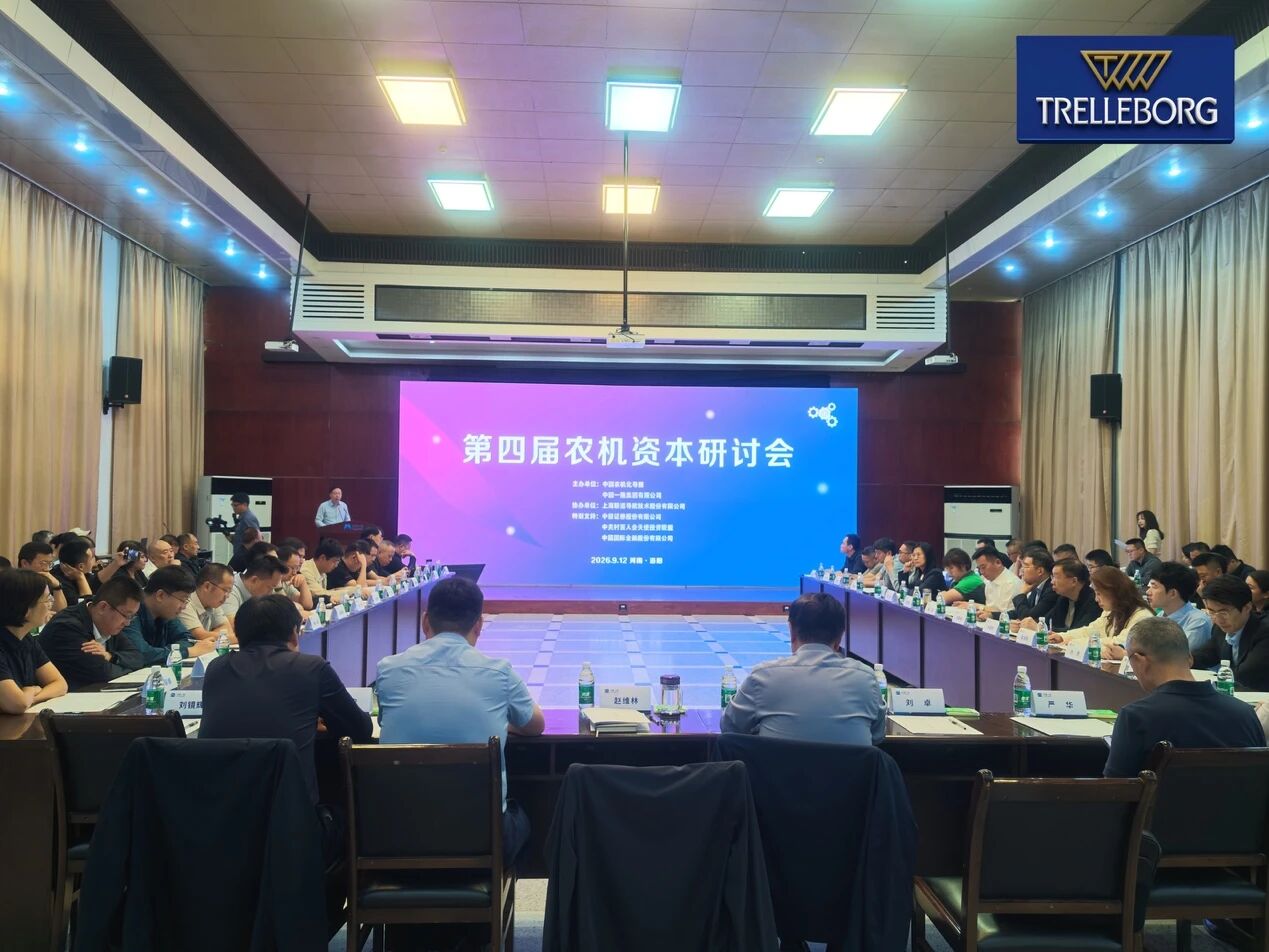
On September 12th, the "2026 Fourth Agricultural Machinery Capital Seminar" jointly organized by China Agricultural Mechanization News and China First Tractor Group Co., Ltd. was held at China First Tractor Group in Luoyang. The theme of this seminar is "Track Selection, Overseas Risk Control, and Market Value Management", gathering representatives from more than 60 agricultural machinery enterprises, investment institutions, and securities firms to conduct in-depth exchanges on topics such as the development trend of the agricultural machinery industry, global layout, and capital markets, and jointly explore new paths for high-quality development of the industry.
Currently, China's agricultural machinery industry is facing multiple opportunities in policy, technology, market, and capital. With the increasingly perfect industrial system, domestic agricultural machinery is accelerating its entry into the global market. In this context, how to do a good job in overseas layout, enhance local business capabilities, and achieve stable operation in the process of globalization has become an important issue of concern for the industry.
In the opening speech, Zhao Weilin, Secretary of the Party Committee and Chairman of China Yituo Group Co., Ltd., emphasized that the speed of going global determines the speed of enterprise development, while compliance and risk control capabilities determine how far an enterprise can go. Ms. Luo Xiangxin, Business General Manager of Yokohama Rubber Group Co., Ltd., was invited to give a keynote speech on "Layout Strategy and Risk Control of Overseas Factory Construction", focusing on overseas layout and long-term operation. Combining decades of globalization practice of Yokohama Rubber Group, she brought her experience and thoughts on overseas factory construction and global operation.

Global layout: tailored to local conditions, continuously optimized
In the theme sharing, Ms. Luo Xiangxin introduced the distribution and development history of Yokohama Rubber Group's 47 global production bases, and combined with the business practices of each base, shared how the enterprise determines factory positioning and business strategies based on the market environment in different regions.
She said,The globalization layout is not simply copying existing models, but should be based on the changes in regional market demand, operating costs, and policy environment, to finely allocate resources and continuously optimize them according to market development.
For multinational corporations, completing a global layout is only the first step. To truly achieve long-term development, it is even more necessary to delve into the local market.
At the local business level, cultivating and developing local talents, improving the network of suppliers and partners, and granting decision-making authority to local teams that match their responsibilities can help enterprises get closer to the market and improve their response speed to local demand and market changes.
Layout from a global perspective and support operations with local capabilities is an important foundation for achieving long-term implementation of globalization strategies.

Mergers and acquisitions integration: expanding capability boundaries and unleashing collaborative value
In addition to building factories overseas, mergers and acquisitions are also important practices for Yokohama Rubber Group to improve its global business layout.
Based on the development experience of the group, Ms. Luo Xiangxin shared her practical experience in improving product systems, supplementing manufacturing capabilities, and expanding regional markets through acquisition and integration.
Different enterprises have their own accumulations in product, technology, channel, and customer resources, which also provide a foundation for complementary advantages between businesses. Through effective integration, enterprises can combine these advantages with existing businesses, further expand their business capabilities, and provide customers with richer product choices and more comprehensive service support.
This also reflects Yokohama Rubber Group's continuous exploration of business synergy and long-term value creation in the process of globalization development.

Focusing on long-term operation, jointly exploring new paths for agricultural machinery to go global
For Chinese agricultural machinery enterprises that are accelerating their entry into overseas markets, globalization not only means entering new markets, but also means facing a series of new challenges such as product certification, supply chain, local teams, channel construction, and local operations. How to establish long-term and stable business capabilities while expanding overseas markets is a topic that needs to be continuously considered for the global development of enterprises.
This sharing provides a practical reference for multinational enterprises to further understand overseas factory construction and global operation in the agricultural machinery industry chain.
As a brand under Yokohama Rubber Group, Trelleborg Tire will rely on the group's global resources and local business experience, continue to pay attention to the global agricultural market demand, deepen communication and cooperation with industry chain partners, and jointly explore more stable and sustainable development paths at home and abroad.